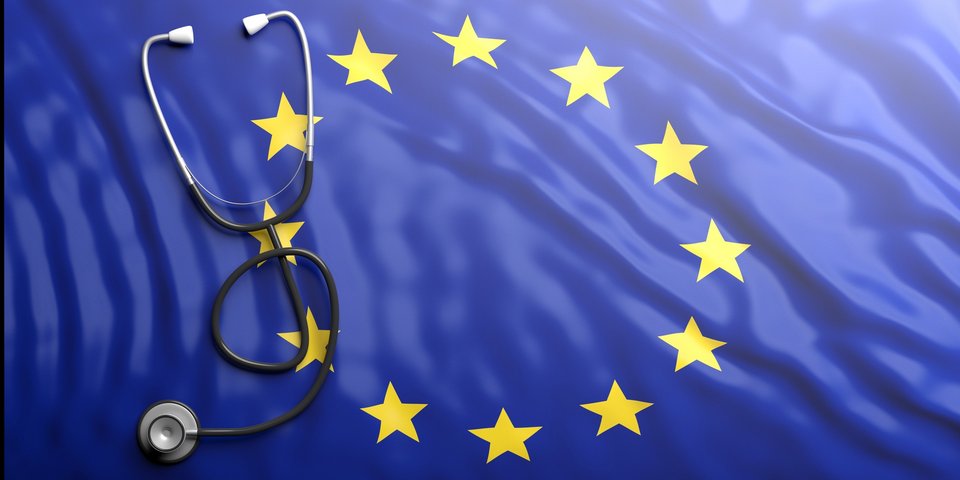
 ©Rawf8 - stock.adobe.com
Critical Medicines Act (CMA)
Draft report on the CMA – DSV sees need for improvement.
CC – 09/2025
After the
European Commission presented its proposal for a Critical Medicines Act on 11
March this year, the European Parliament has also taken up the dossier. On 1
September, Tomislav Sokol (EPP, Croatia), rapporteur of the European
Parliament, presented his draft
report on the Critical Medicines Act in the Committee on Public Health
(SANT). The aim of the CMA is to strengthen production in Europe and to ensure
the long-term supply of critical medicines (see News 07/2025).
Extension of scope – risk of dilution
In his
draft report, Tomislav Sokol proposes to extend the scope of the CMA to
“medicinal products of common interest.” The German Social Insurance (DSV)
takes a critical view of this. If – as proposed in the report – orphan drugs or
novel antimicrobial products are included in strategic projects and public
funding schemes, there is a risk of resource misallocation and a dilution of
the CMA’s objectives. The focus of the regulation should therefore remain on a
narrowly defined set of medicinal products with immediate and critical supply
relevance.
Award criteria – preserving flexibility for health insurers
Another key
proposal of the draft report is the mandatory introduction of award criteria
beyond price. While additional criteria such as resilience or EU-based
production can, in principle, contribute to security of supply, EU procurement
law already provides sufficient flexibility to include such requirements. This
flexibility is already used in practice, for example in Germany, where health
insurers are legally obliged to take account of certain medicines manufactured
in Europe when concluding rebate contracts.
The DSV
sees a need for adjustment here: mandatory application of additional criteria
would restrict the flexibility of contracting authorities – in particular
health insurers – and, in combination with mandatory multiple sourcing, would
lead to significant cost increases without actually improving security of
supply. The DSV therefore calls for such criteria to remain optional.
Sanctions – public funds only in return for commitments
The DSV
welcomes the proposed sanctions in the draft report. Companies that fail to
meet their supply obligations despite receiving public support should in future
be held accountable. This sends an important signal: public funds must always
be linked to enforceable commitments and clear returns.
Outlook
Until 19 September, the members of the SANT Committee were able to submit amendments to Sokol’s draft report. Following this, cross-party negotiations are now taking place to work out compromises in order to build majorities. The final vote on Sokol’s report is scheduled
for 2 December in the SANT Committee. The opinions of the associated committees,
Industry, Research and Energy (ITRE), Internal Market and Consumer Protection
(IMCO) and Environment, Public Health and Food Safety (ENVI), have meanwhile
also been issued and will feed into the discussions.
For the
DSV, it is essential that the CMA remains focused on truly critical medicines,
strengthens security of supply and at the same time safeguards the financial
sustainability of solidarity-based health systems. The DSV will continue to
closely monitor and assess the legislative process with this focus.
The DSV statement on Tomislav Sokol’s draft report can be
found here.
The comprehensive DSV opinion on the European Commission’s proposal for the CMA
can be found here.