
 iStockphoto-industryview
Carcinogens Directive
Commission launches the sixth amendment.
SK – 09/2025
In mid-July
– shortly before the summer break – the European Commission published its
proposal for the sixth amendment of the Directive on Carcinogens, Mutagens and
Reprotoxic Substances (CMRD). The purpose of the directive is to further
improve the protection of workers against hazardous substances at the
workplace. A central element of the proposal is the inclusion of welding fumes
as well as the introduction of new binding occupational exposure limit values
for cobalt, polycyclic aromatic hydrocarbons (PAHs), and 1,4-dioxane.
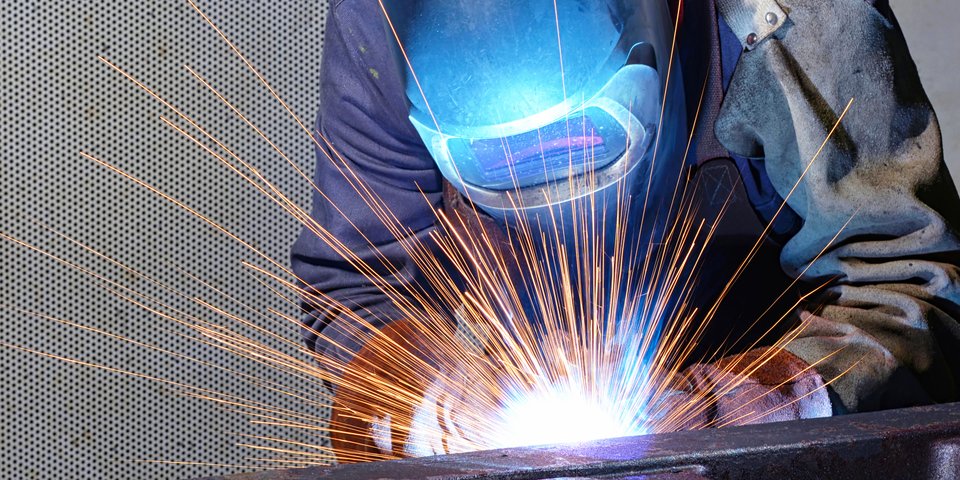
Inclusion of welding fumes
Work
involving welding fumes that contain carcinogenic, mutagenic, or reprotoxic
(CMR) substances is to be included in this list in the future. This primarily
concerns welding fumes that contain harmful substances such as chromium,
nickel, and cadmium compounds. The explicit inclusion of these specific welding
activities makes it clear that employers must implement protective measures
that increase workers’ safety and promote a healthier working environment.
Stronger protection in work with future technologies
Since
national limit values for cobalt, PAHs, and 1,4-dioxane vary considerably among
the Member States, the European Commission sees a need for action to provide
workers with the best possible protection across the EU. Particularly in
fast-growing industries such as battery production, the limit value for cobalt
and inorganic cobalt compounds is intended to close existing gaps. This sector
is becoming increasingly important, especially with regard to electromobility.
Specifically, the Commission proposes a limit value of 0.01 mg/m³ for inhalable
particles and 0.0025 mg/m³ for respirable particles. Transitional limit values
are intended to give industry six years to adapt.
Further harmonisation of limit values
In addition
to cobalt, 1,4-dioxane, which is frequently used as a solvent, will also be
newly added to Annex III of the CMRD. The use of this substance is widespread,
for example, in the chemical and textile industries as well as in cleaning and
washing agents. The proposed general limit value is 7.3 mg/m³, complemented by
a short-term limit value of 73 mg/m³. In addition, the proposal foresees, for
the first time, a biological limit value.
PAHs, which
mainly arise in heavy industry and are also demonstrably found in welding
fumes, are to receive a new occupational limit value of 0.00007 mg/m³. To
facilitate adjustment for the affected sectors, the proposal – as already with
cobalt – provides for a six-year transitional arrangement.
Occupational safety as a clear priority for Denmark
Keeping
with the motto “Safe and healthy working lives with fair working conditions,”
the Danish Council Presidency has declared the strengthening of occupational
safety and health to be one of its priorities. A focus is placed on promoting
negotiations on the sixth amendment of the CMRD. While the Council has already
begun its work, the European Parliament is still in an early phase of defining
its position.
Commission continues the course
With the
proposal for the sixth amendment of the CMRD, the European Commission continues
its chosen course of systematically improving the protection of workers against
CMR substances. The amendment draft not only creates more legal certainty for
employers in all Member States but also supports central EU initiatives: the
Strategic Framework on Health and Safety at Work 2021–2027, the European Cancer
Plan, and the European Pillar of Social Rights. It is now up to the European
Parliament and the Council to take up and further negotiate the proposals. At
the same time, the Commission is already preparing the next revision of the
directive with a new study.