
 iStockphoto-industryview
Occupational Exposure Limits
Start of trilogue negotiations on the sixth amendment of the CMRD in sight.
SK – 03/2026
Since July
2025, the European Parliament and the Council have been working on the sixth
amendment of the Directive on carcinogens, mutagens and reprotoxic substances
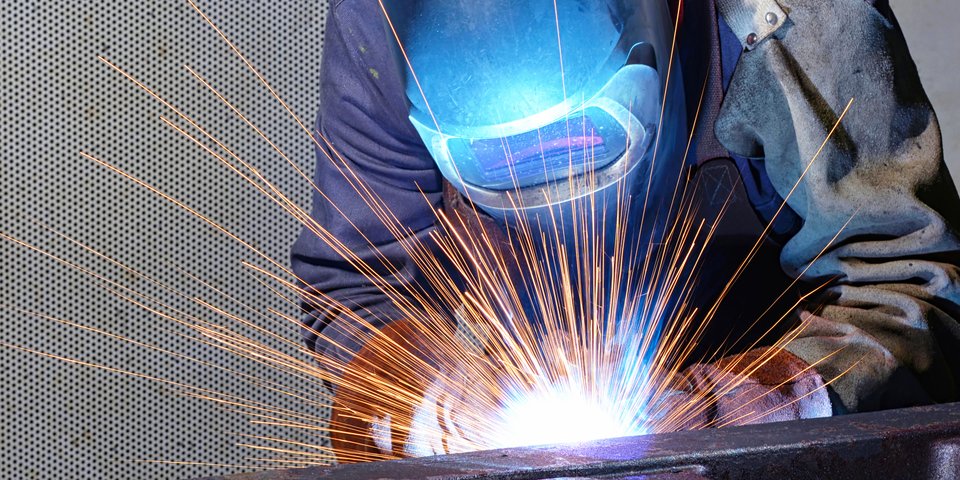
(CMRD). The European Commission had proposed to include welding fumes as a
hazardous workplace substance and to introduce new binding occupational
exposure limits for cobalt, polycyclic aromatic hydrocarbons (PAHs) and
1,4-dioxane. While the Council already adopted its position in December 2025, discussions in the European
Parliament’s Committee on Employment and Social Affairs (EMPL) are still
ongoing.
Council calls for limit value for isoprene
In its
general approach, the Council calls for the development of additional practical
guidelines for welding fumes, particularly for small and medium-sized
enterprises (SMEs) as well as for labour inspectorates, in order to ensure a
uniform minimum level of protection. Since welding fumes are to be included in
Annex I of the CMRD for the first time due to their potential reprotoxic
effects, the Council also sees a need to adjust the definitions in Article 1 of
the Directive.
In
addition, the Council advocates setting an EU-wide occupational exposure limit
for isoprene, thereby following the recommendations of the European Chemicals
Agency and the Advisory Committee on Safety and Health at Work (ACSH). Numerous
Member States support its inclusion and refer to the precautionary principle,
the limited data available, the need for legal certainty and the low expected
implementation costs. For 1,4-dioxane, the biological limit value should in
future be determined at the end of the shift or after exposure.
Cobalt in the focus of Parliament
The amendments
proposed by the rapporteur in the EMPL Committee, Liesbet Sommen (EPP, BE),
focus in particular on the provisions relating to cobalt and welding fumes. She
argues that the limit value for cobalt should not be further lowered after the
transitional period, but that the value foreseen by the European Commission for
the transitional period should be maintained permanently. This is justified by
the importance of cobalt for several strategically important sectors. Already
in January, the Social Democrats (S&D) and the Greens expressed opposition
to these proposals. They support the European Commission’s proposal, which in
their view already represents a compromise between industrial policy interests
and the protection of workers.
Furthermore,
Sommen proposes extending the wording on welding fumes in Annex I to include
processes in which fumes are generated in a comparable manner. Like the
Council, she also calls for the inclusion of isoprene, greater consideration of
the gender dimension, and financial and administrative support for SMEs.
Several of her proposals are also reflected in the amendments tabled by
S&D, the Greens and Renew. These include, among other things, targeted risk
assessments and medical monitoring for firefighters and emergency personnel,
mandatory training, as well as regular and proportionate breaks when wearing
personal protective equipment.
Outlook
In the
first half of March, rapporteur Sommen held several discussions with the shadow
rapporteurs on possible compromise proposals for the report. She plans to
submit the report adopted by the EMPL Committee to the plenary for a vote, if
possible already in April.