
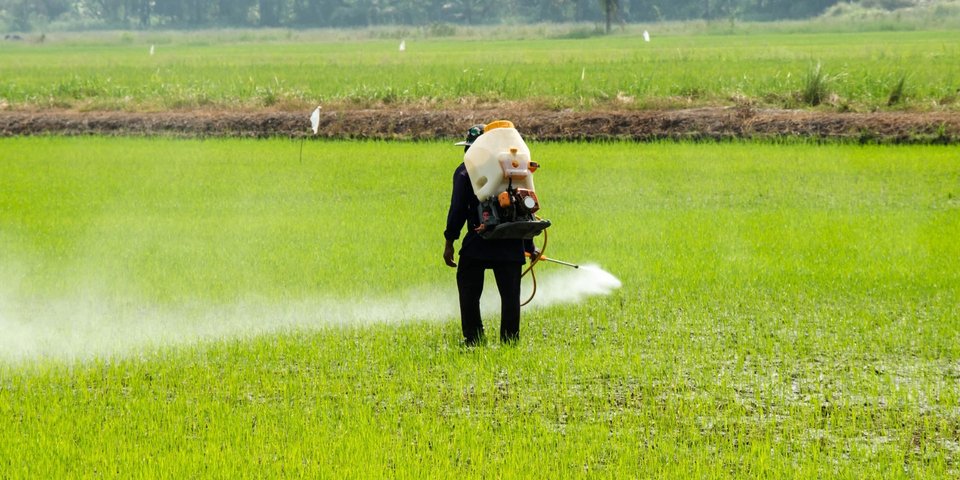
 khunkorn
Pesticides
European Parliament hearing highlights health risks and gaps in worker protection in agriculture.
SK – 11/2026
How well are agricultural workers protected
from the health risks associated with pesticides? The European Parliament’s
Committee on Employment and Social Affairs (EMPL) examined this question at a
public hearing on 9 November. The discussion focused on existing gaps in
protection, workplace prevention and the recognition of occupational diseases.
MEPs discussed possible improvements to
occupational safety and health with experts from the European Agency for Safety
and Health at Work (EU-OSHA) and representatives of trade unions, employers’
associations and environmental organisations. The discussion also covered two
current EU legislative initiatives, the food and feed safety simplification
package (Omnibus X) and the proposed regulation on the post-2027 Common
Agricultural Policy (CAP).
Evidence on exposure and health risks
EU-OSHA presented findings from its 2025
Workers’ Exposure Survey. The findings showed that 84.4 per cent of
agricultural workers are exposed to at least one occupational cancer risk
factor. Across all occupational groups, the figure is 47.3 per cent. Gaps in
protection persist despite existing rules on risk assessment and occupational
safety and health. EU-OSHA therefore stressed the importance of the hierarchy
of controls. Under this approach, hazards should be eliminated at source
wherever possible, and technical and organisational measures should take
priority over personal protective equipment.
The composition of the workforce can also make
prevention more difficult. The agricultural employers’ association Geopa-Copa
stressed employers’ commitment to protecting workers. The European Federation
of Food, Agriculture and Tourism Trade Unions (EFFAT) pointed to particular
challenges in protecting seasonal and migrant workers, including language
barriers and difficulties in providing training.
EU-OSHA also pointed out that measures to
reduce pesticide use can introduce other health risks. Replacing chemical weed
control with manual weeding, for example, can increase the risk of
musculoskeletal disorders.
Pesticide Action Network (PAN) Europe
criticised gaps in pesticide risk assessment. It argued that exposure to
mixtures and co-formulants, as well as long-term exposure to low levels, is
inadequately assessed. In the organisation’s view, hazardous active substances
such as buprofezin and flurochloridone remain on the market even though the law
requires them to be banned. PAN Europe also criticised the continued approval
of active substances such as chlortoluron and forchlorfenuron, which are
classified as toxic to reproduction in category 1B.
Prevention and recognition of occupational diseases
Several participants referred to studies
suggesting that the protection provided by personal protective equipment (PPE)
is often overestimated. They also criticised the widespread use of PPE as the
first protective measure, even though it ranks last in the hierarchy of
controls. MEPs from the Greens in particular called for hazardous substances to
be replaced with less harmful alternatives wherever possible and for an overall
reduction in pesticide use.
The hearing also highlighted gaps in the
recognition of occupational diseases and in support for affected workers.
France, Germany and Italy were cited as examples of countries that have already
taken steps to recognise Parkinson’s disease resulting from occupational
exposure to pesticides as an occupational disease. Belgium is preparing similar
measures. Given the differing approaches across Member States, EFFAT called for
the European Schedule of Occupational Diseases to be made legally binding
through a directive.
Social conditionality in the CAP
Several EMPL members criticised the Council’s
partial negotiating position on the post-2027 CAP framework, adopted in late
October. The debate focused on social conditionality, which links access to
agricultural funding to compliance with certain labour and occupational safety
and health requirements.
MEPs criticised the Council’s approach for
removing worker safety and health requirements while retaining conditions on
animal welfare and plant health. They warned that this would weaken the link
between agricultural subsidies and worker protection.