
 iStockphoto-industryview
Occupational exposure limits
Sixth amendment to the CMRD nearing completion.
SK – 09/2026
On 2
September, the European Parliament’s Committee on Employment and Social Affairs
(EMPL) approved, by a large majority, the outcome of the trilogue
negotiations on the sixth amendment to the Directive on Carcinogens, Mutagens and Reprotoxic Substances (CMRD). The Council had already given its
approval on 22 July.
The
amendment aims to further strengthen the protection of workers from hazardous
chemicals at work. Among other measures, new or revised occupational exposure
limits will be introduced for cobalt, polycyclic aromatic hydrocarbons,
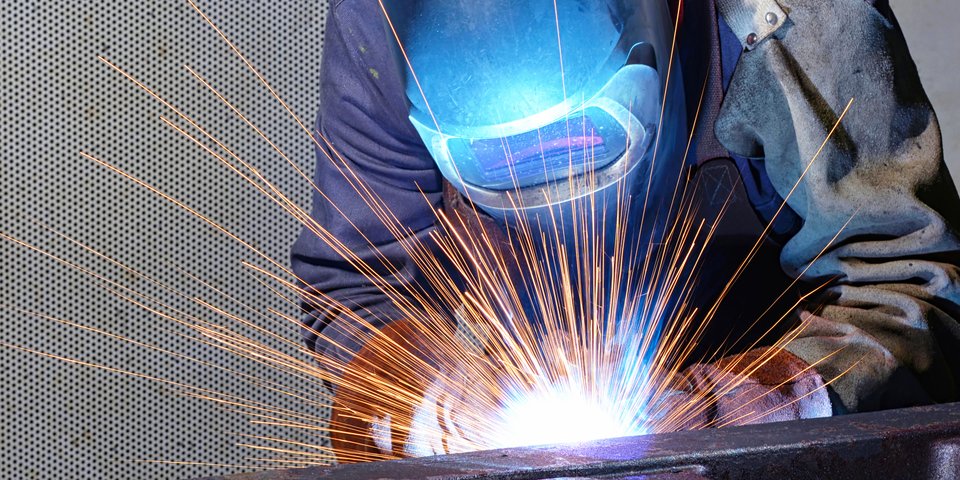
isoprene and 1,4-dioxane. In addition, welding fumes will be included within
the scope of the CMRD. Welding fumes can contain hazardous substances such as
chromium, nickel and cadmium compounds, which are classified as carcinogenic.
Extension of the Commission proposal
The Council
and the European Parliament have expanded the European Commission’s
original proposal in several areas. A new occupational exposure limit for
isoprene has been added. The substance is used in particular in the chemical
and rubber industries.
The
definitions of “carcinogens”, “mutagens” and “reprotoxic substances” have also
been amended to take account of the inclusion, for the first time, of welding
fumes with potentially reprotoxic effects in Annex I to the Directive. At the
same time, Article 18a has been supplemented. This leaves open the possibility
of setting limit values for individual components of welding fumes in the
future.
Personal protective equipment
At the
initiative of the European Parliament, the Directive also sets out more clearly
when personal protective equipment (PPE) may be used. PPE should only be used
where exposure cannot be prevented by other measures. Requirements for the
selection, maintenance, cleaning and individual fitting of PPE are also laid
down.
This
explicitly strengthens the STOP principle. It establishes the order in which
protective measures should be taken to eliminate or minimise hazards through
substitution, technical measures, organisational measures or personal
protective measures. Personal protective equipment should only be used where
other protective measures are insufficient. This is an important clarification,
particularly for work involving carcinogenic, mutagenic or reprotoxic
substances, also known as CMR substances.
Another new
provision is an entitlement to regular breaks for workers who are required to
wear personal protective equipment to protect themselves from CMR substances.
The duration and frequency of these breaks are to be determined on the basis of
the risk assessment. The hierarchy of protective measures is also given greater
emphasis in the recitals of the Directive.
Particular focus on emergency and firefighting personnel
For the
first time, the otherwise generally worded CMRD explicitly addresses certain
groups of emergency personnel. At the initiative of the European Parliament, it
is stated that employers should assess and reduce the exposure of emergency and
firefighting personnel to CMR substances, including polycyclic aromatic
hydrocarbons.
In
addition, the European Commission and the European Agency for Safety and Health
at Work (EU-OSHA) are to take into account the specific exposure situations of
emergency and firefighting personnel when developing future guidelines.
Further occupational exposure limits in focus
The
European Parliament is expected to hold its final vote on the trilogue outcome
during the first plenary session in October. This will pave the way for the
formal adoption and publication of the sixth amendment to the CMRD.
CMRD VI
also provides impetus for the further development of the Directive. The Council
and the European Parliament call on the European Commission to advance the
identification of priority substances for further occupational exposure limits
and to provide workers with clearer information about the remaining risks
associated with exposure to CMR substances. For future
amendments, the Council and the European Parliament explicitly refer to
substances identified as immediate priorities by the Advisory Committee on
Safety and Health at Work (ACSH).