 BILDSCHÖN / Peter Lorenz
EU Transformation Talks
Social security as a driver of Europe’s competitiveness
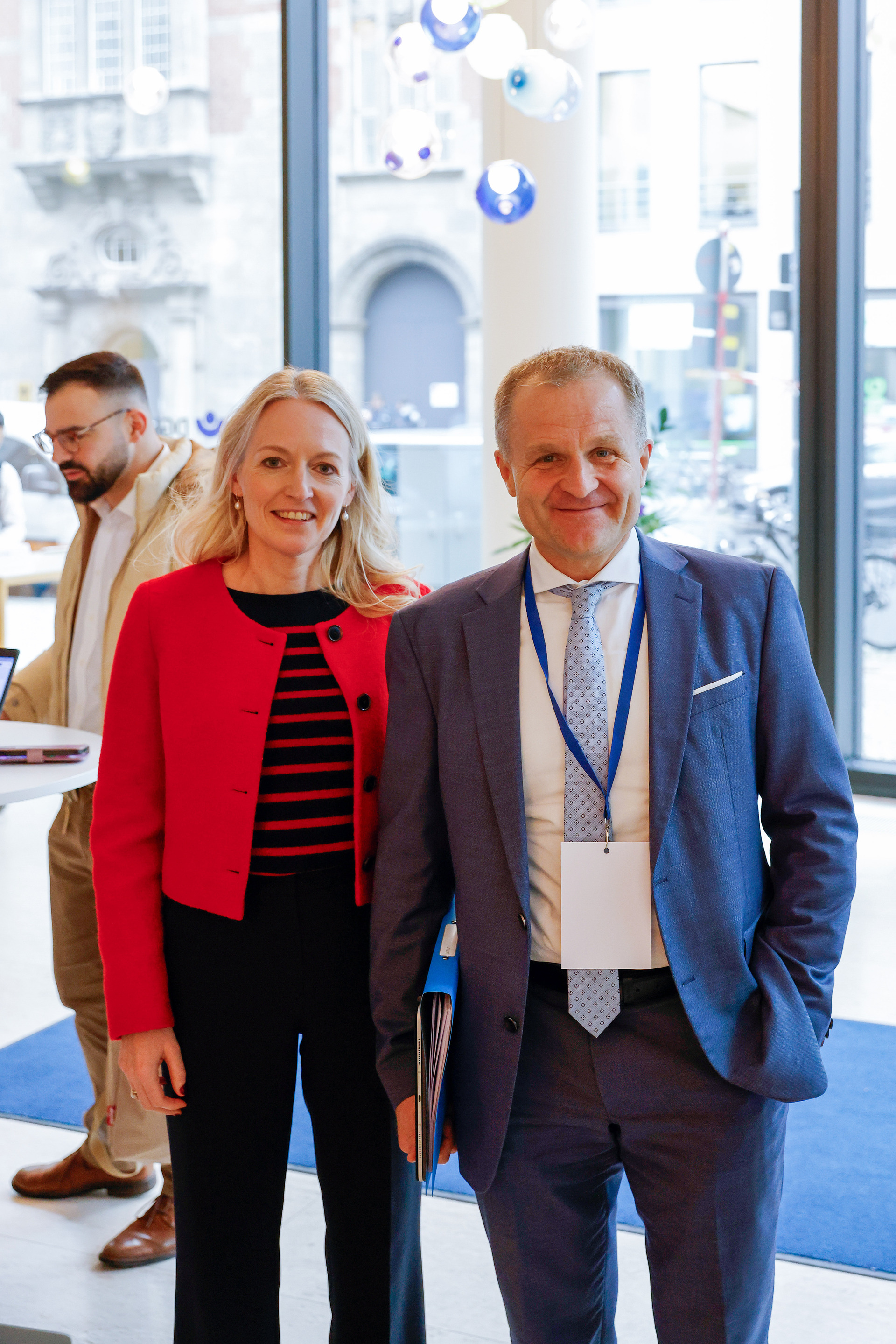
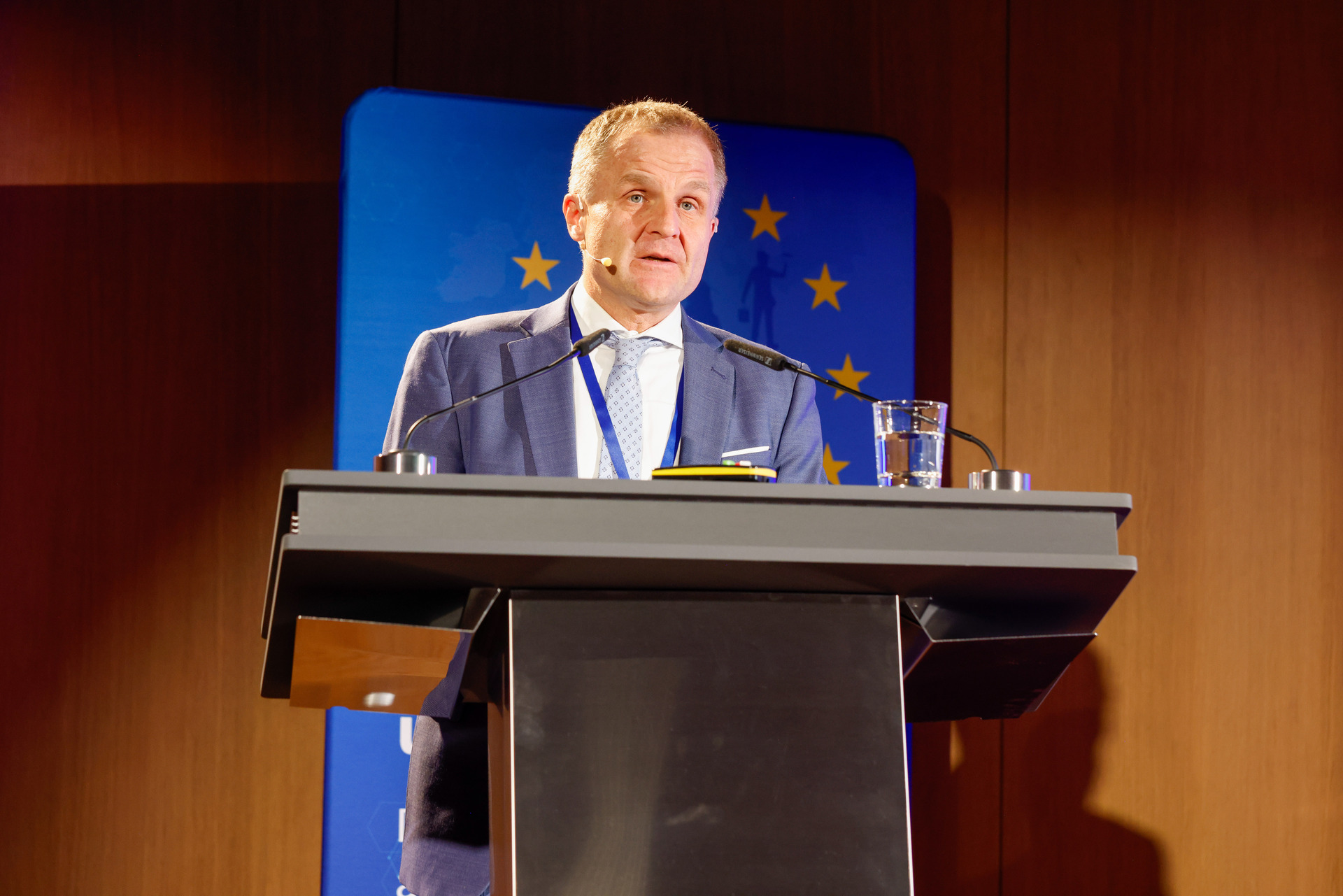
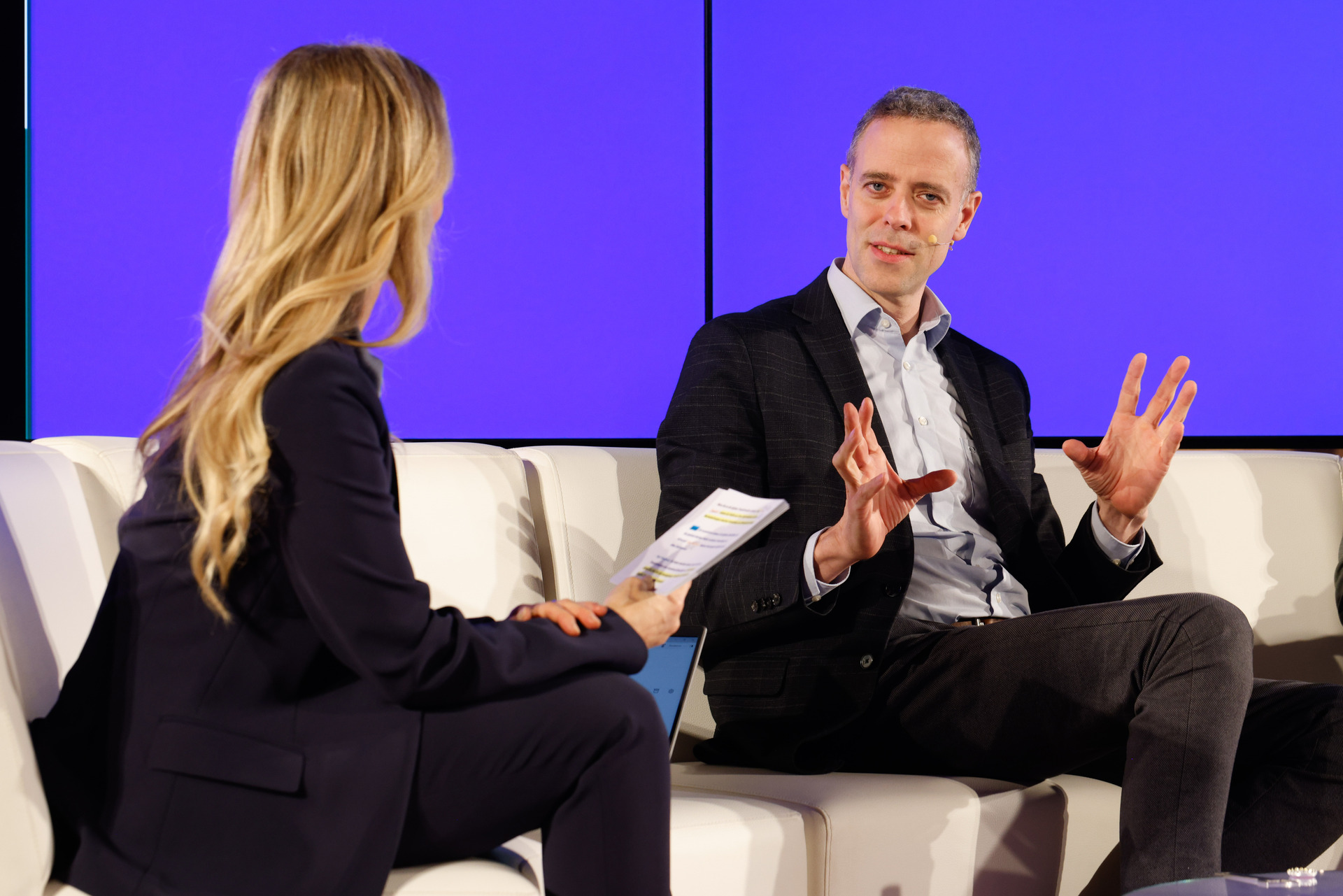
Critical, digital, resilient – under this guiding principle, the German Social Accident Insurance (DGUV), the German Federal Pension Insurance (DRV), the National Association of Statutory Health Insurance Funds (GKV-Spitzenverband) and the European Representation of the German Social Insurance (DSV) hosted a conference on digitalisation in the public sector on 17 November. The event focused on facilitating dialogue between European and national policymakers, public administration and the social insurance institutions. One message was clear: progress can only be achieved where cooperation, courage and coherent European framework come together.
Aspiration meets reality – Digital administration in practice
The European Commission already provides a range of instruments to support the development of a robust innovation ecosystem for trustworthy artificial intelligence (AI). In her keynote, Lucilla Sioli, Head of the AI Office of the European Commission, outlined how these tools can be put to effective use.
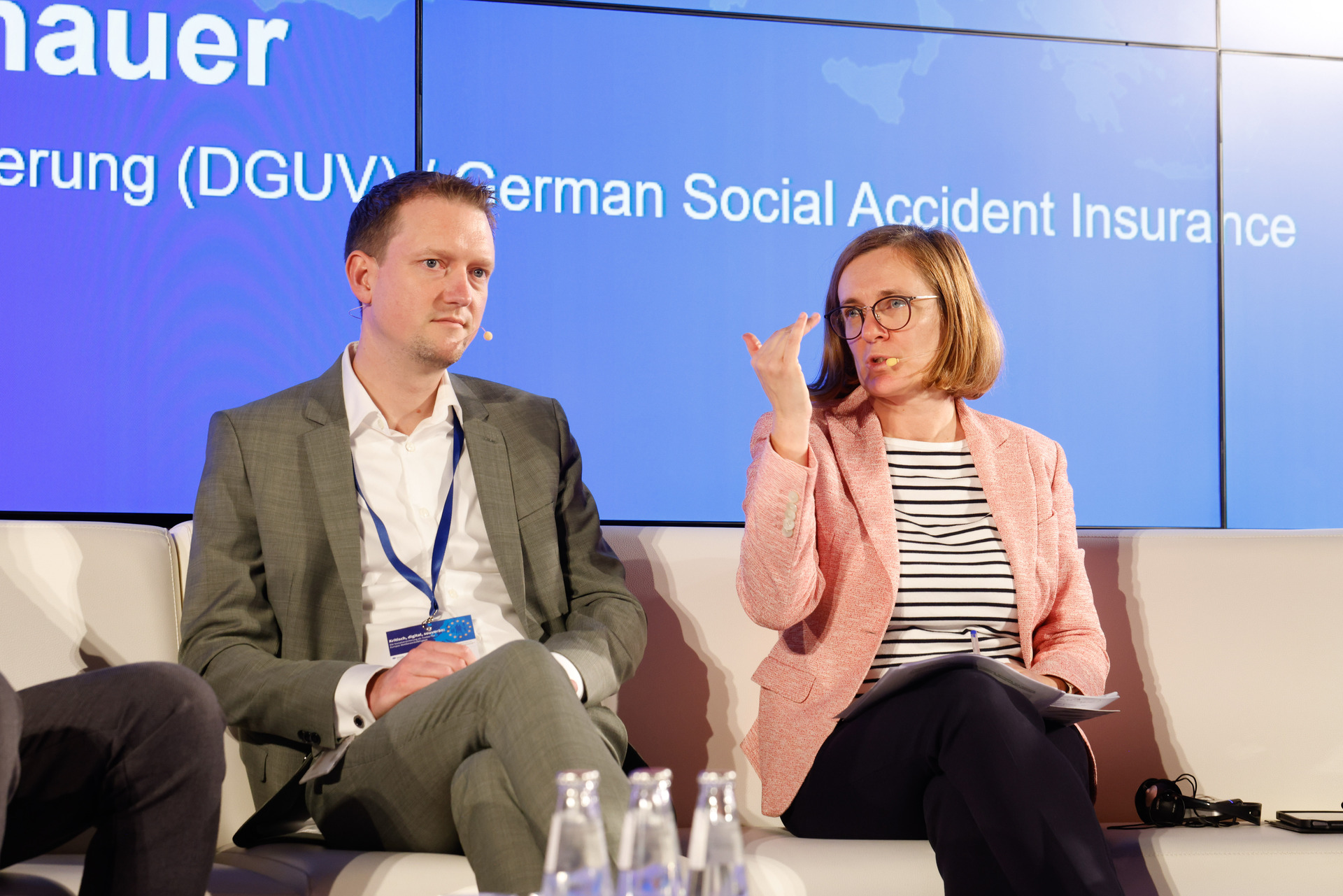
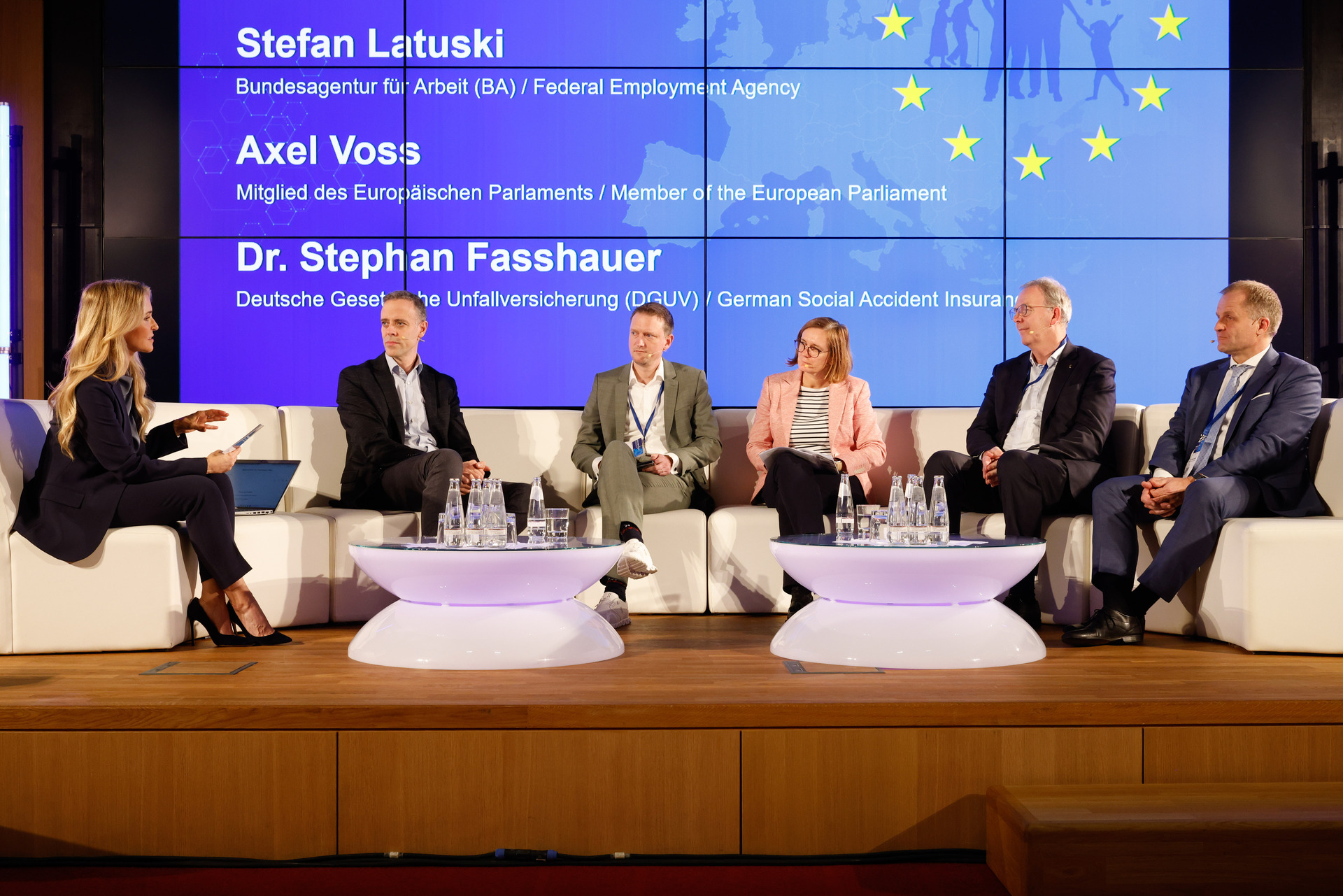
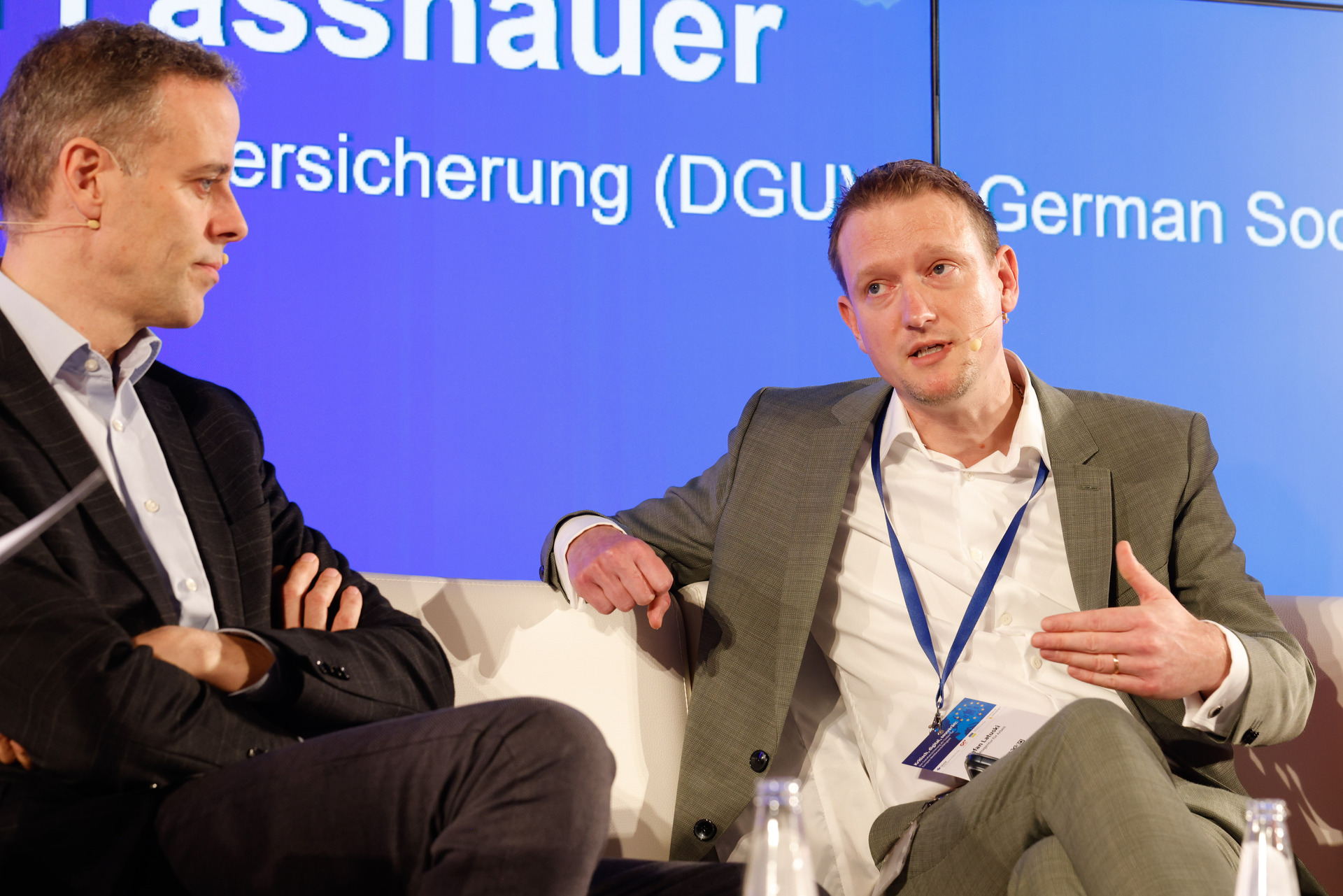
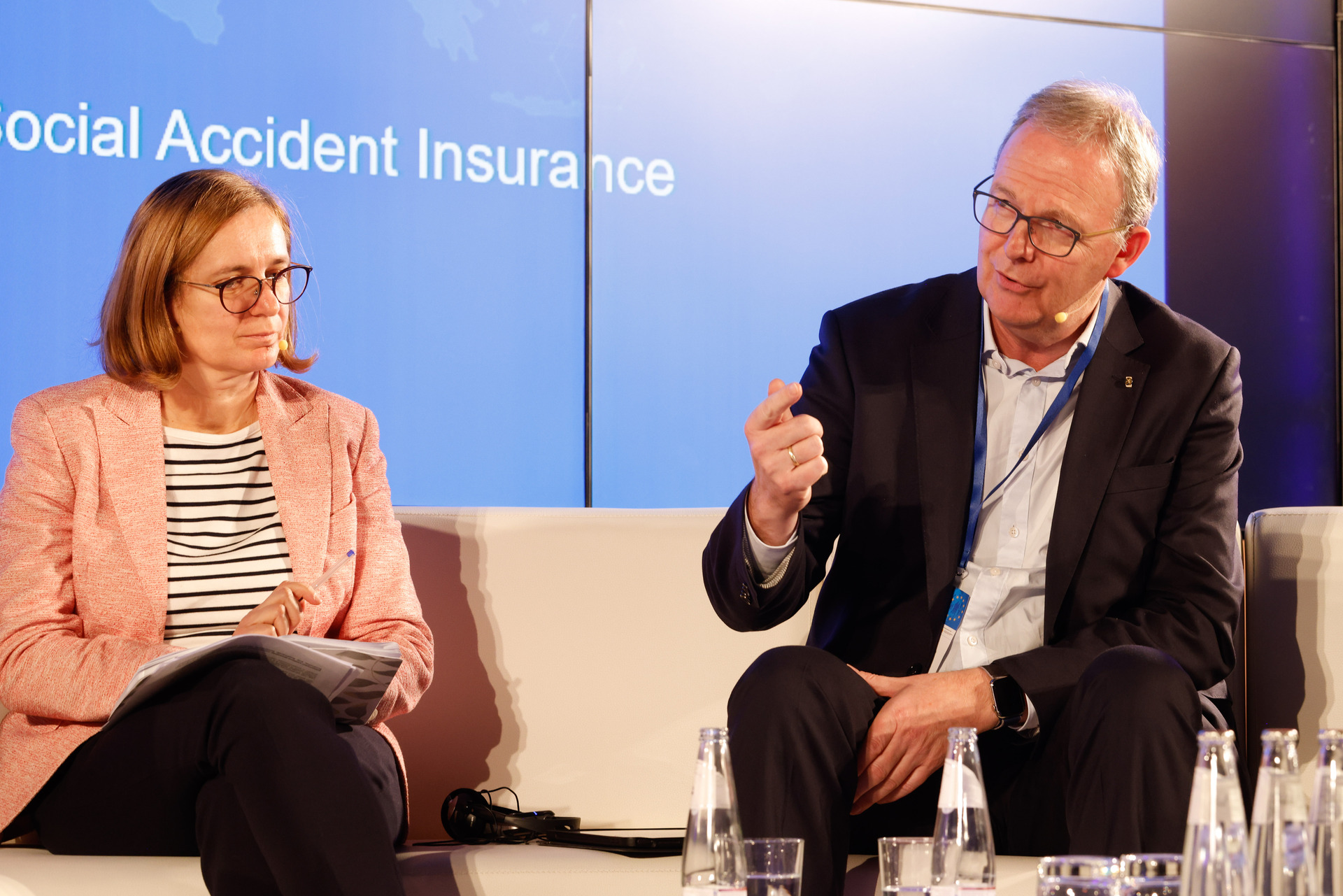
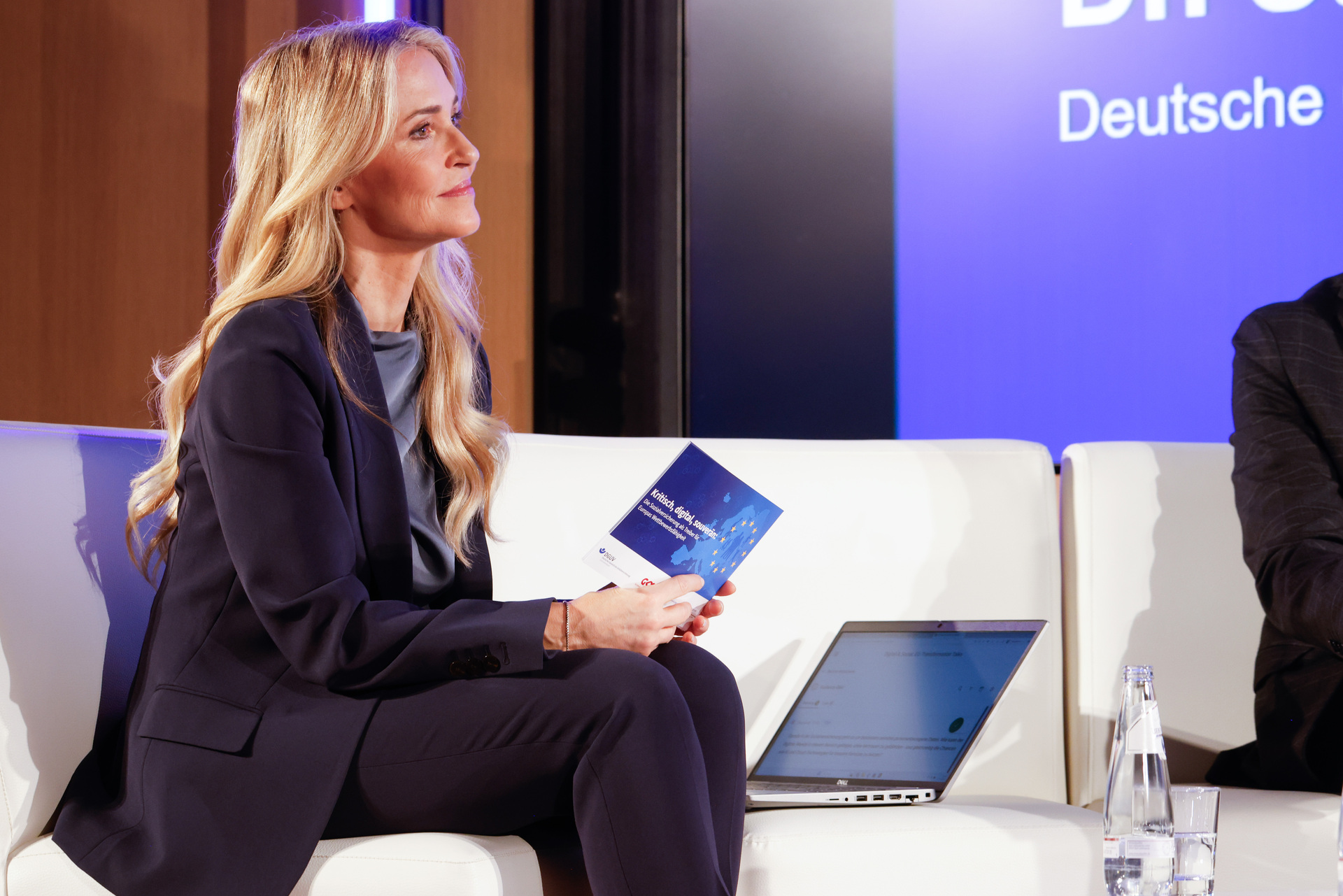
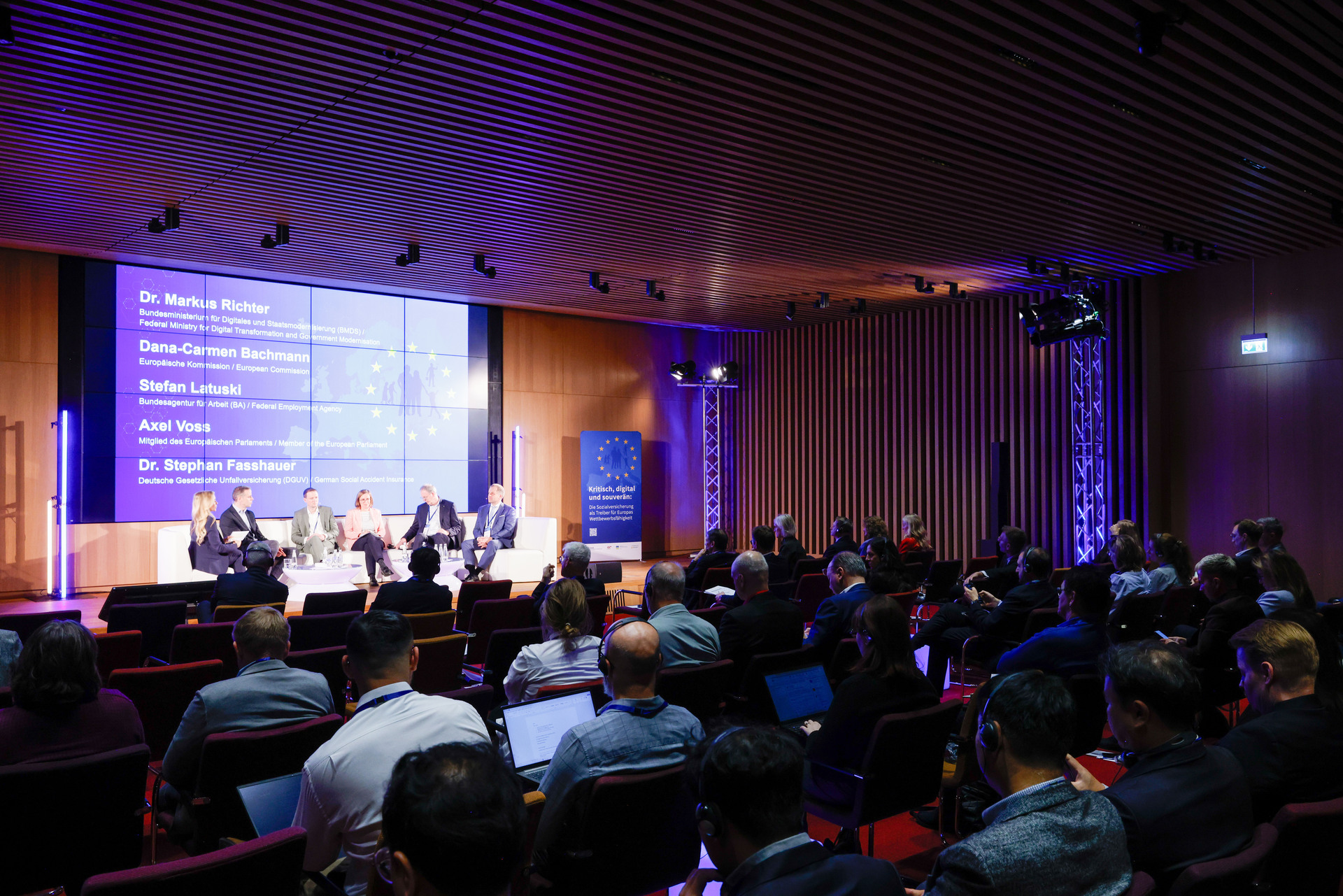
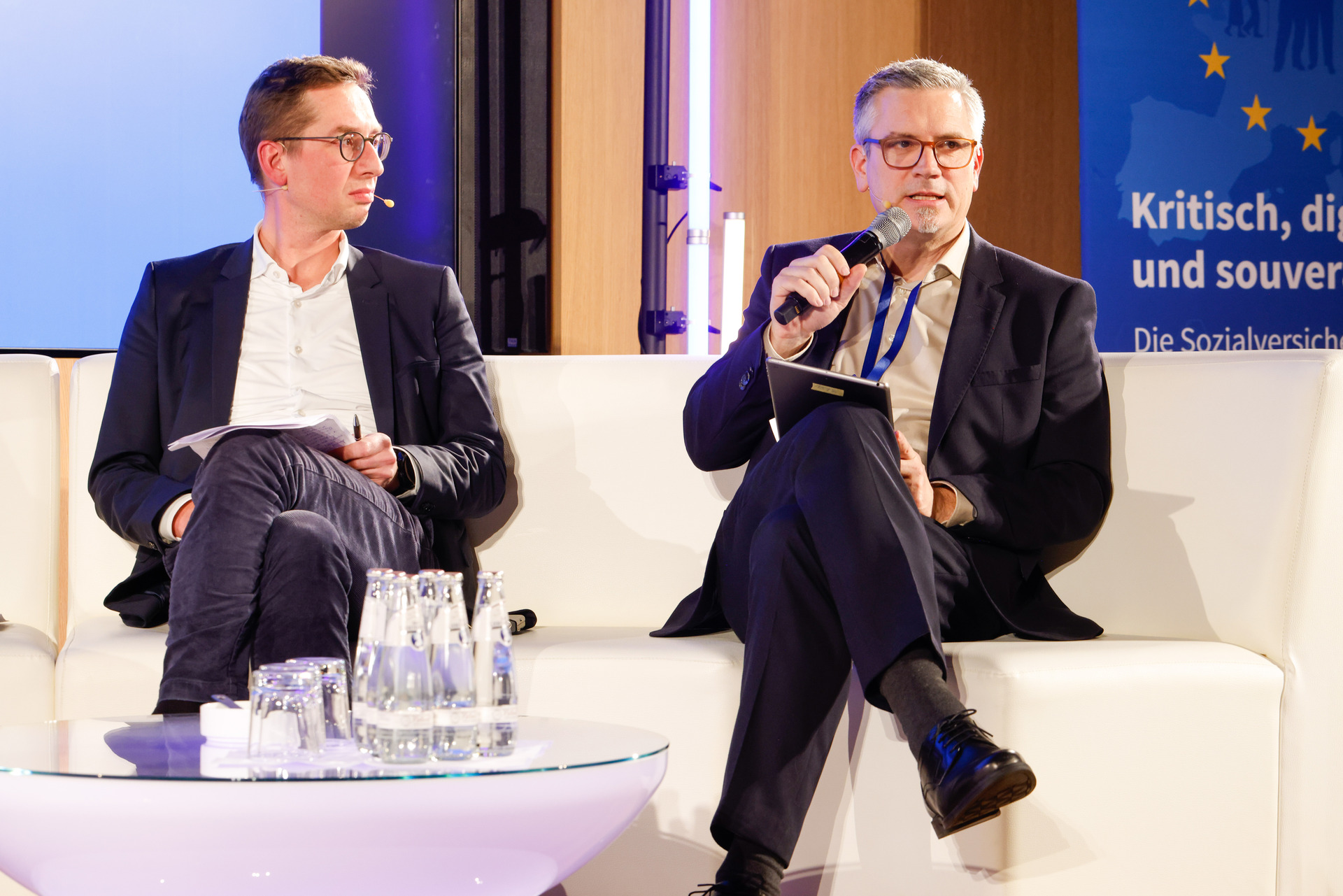
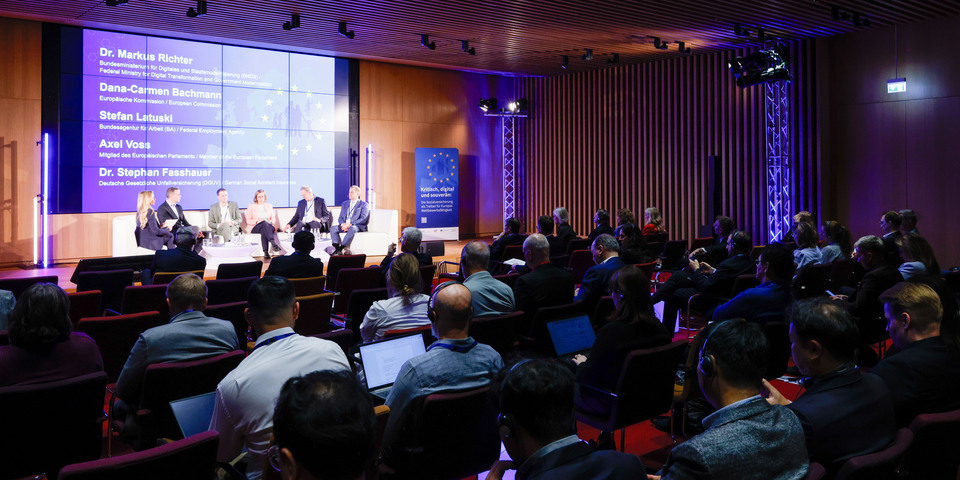
The following first panel focused on how digital public administrations can meet the growing demands in Germany and across Europe. The discussion brought together State Secretary Dr Markus Richter (Federal Ministry for Digital Transformation and Government Modernisation), Dana-Carmen Bachmann (European Commission, DG EMPL), Axel Voss (European Parliament), Stefan Latuski (Federal Employment Agency) and Dr Stephan Fasshauer (DGUV). In addition to addressing the major demographic challenges facing social insurance, the panel also explored efficiency gains through digitalisation and the targeted use of AI applications.
Dr Markus Richter emphasised that public administration must not merely react, but actively shape developments. In many areas, the question is no longer whether to act, but how to implement change effectively. Cross-sector cooperation is therefore essential to accelerate progress and drive innovation. At the same time, sustained efforts are needed to strengthen citizens’ trust and confidence in public administration and social security. A high-performing digital social security system also requires closer coordination at European level and systematic mutual learning.
In this context, Axel Voss urged stakeholders to move forward with confidence and to ensure they have the right partners at their side. Only with determined, like-minded actors can digital solutions be successfully developed and implemented. Dr Stephan Fasshauer underscored that a future-proof digital public administration in Germany requires clear and reliable legal frameworks – both at European and national level. At the same time, he and Stefan Latuski emphasised that the social insurance institutions stand ready to assume responsibility and are already actively driving digitalisation within their organisations.
The discussion made clear that a modern public administration must be practice-oriented, interconnected at European level and shaped collaboratively, so that expectations and reality can be effectively aligned.
Smart but safe – Digital applications in social security
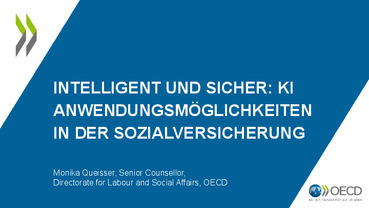
The second panel highlighted the high expectations placed on AI within the social security system. In her keynote, Monika Queisser (OECD) pointed to the considerable public scepticism: many people are not convinced that AI will be introduced in a meaningful and reliable way. Governments, she stressed, must build trust.
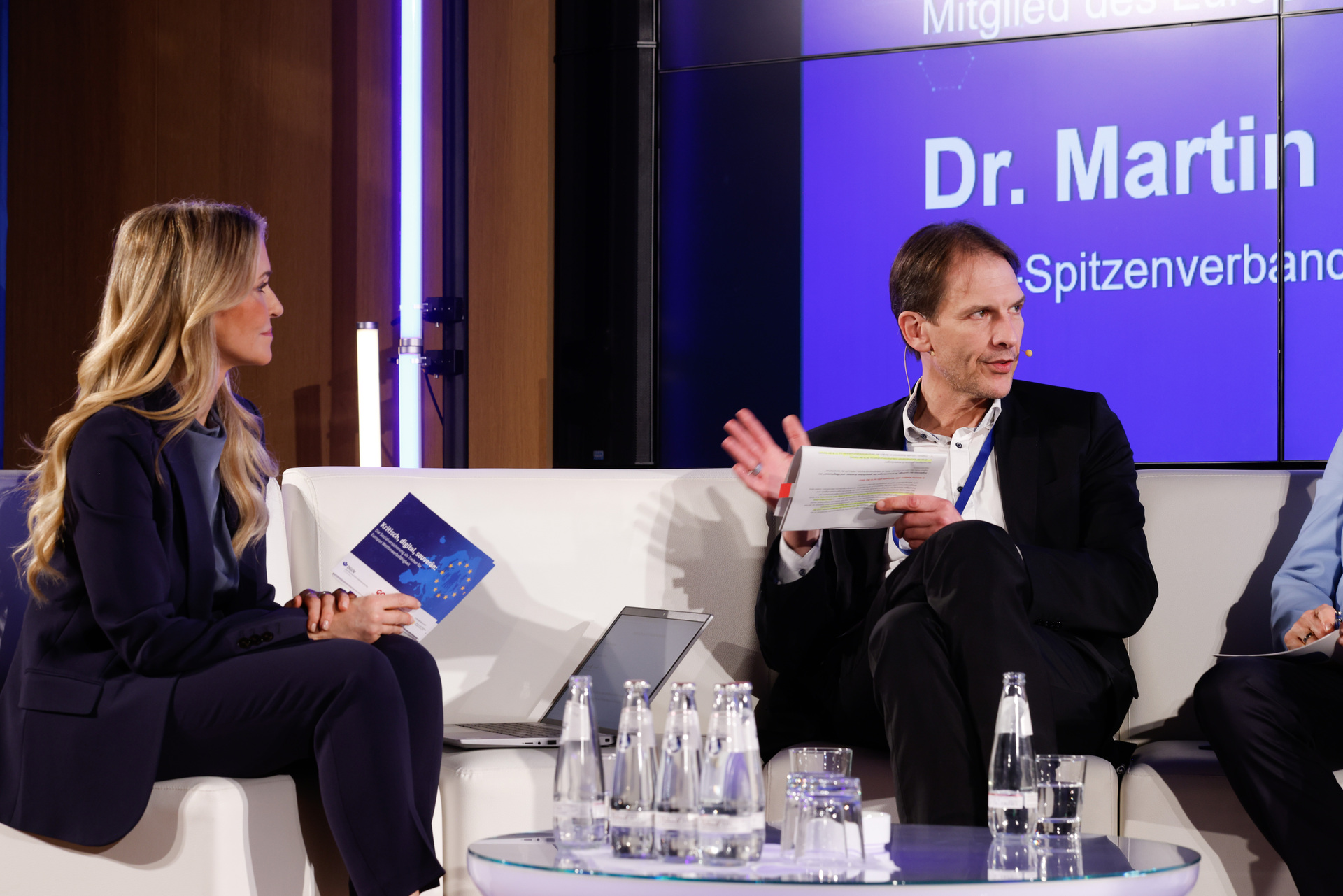
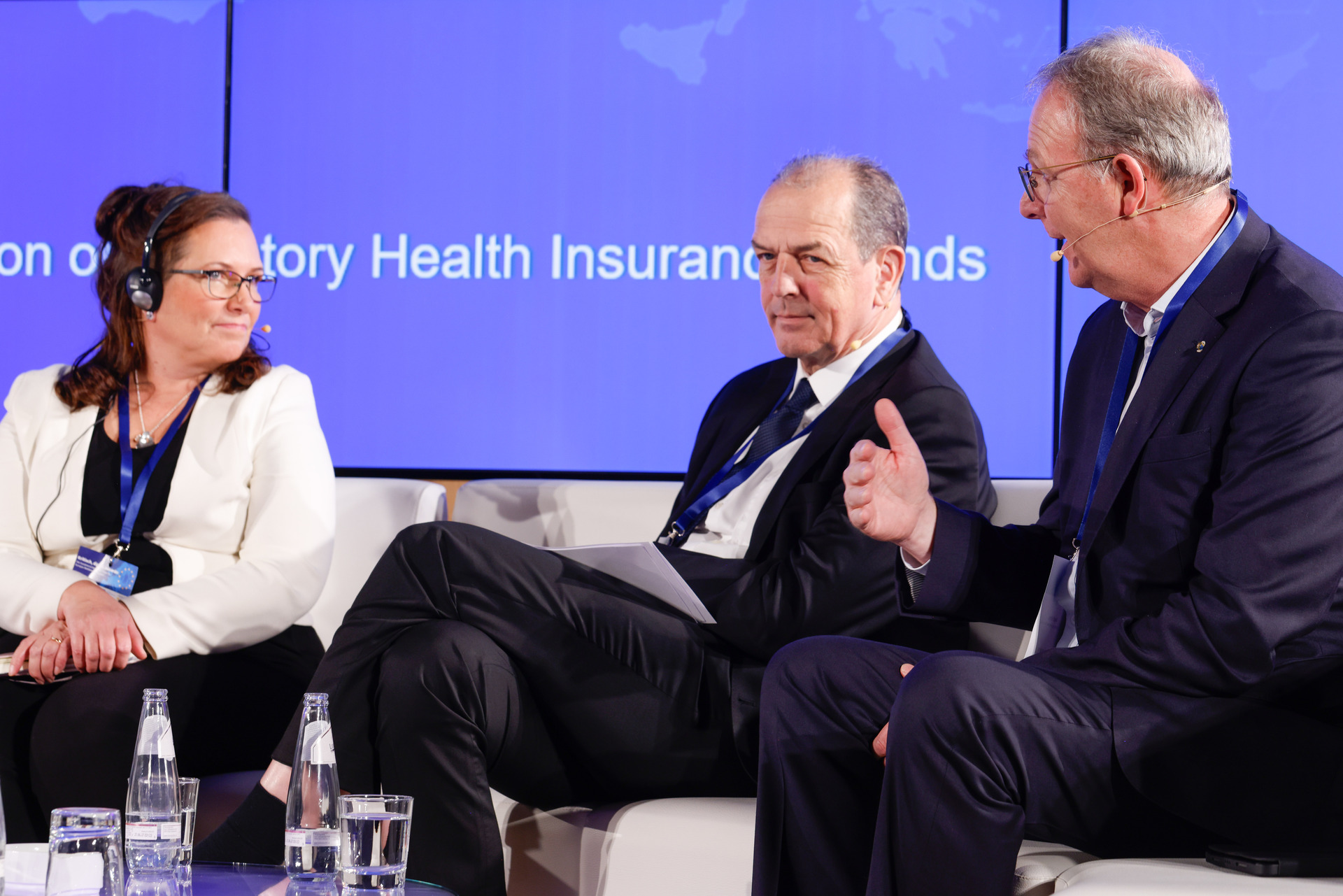
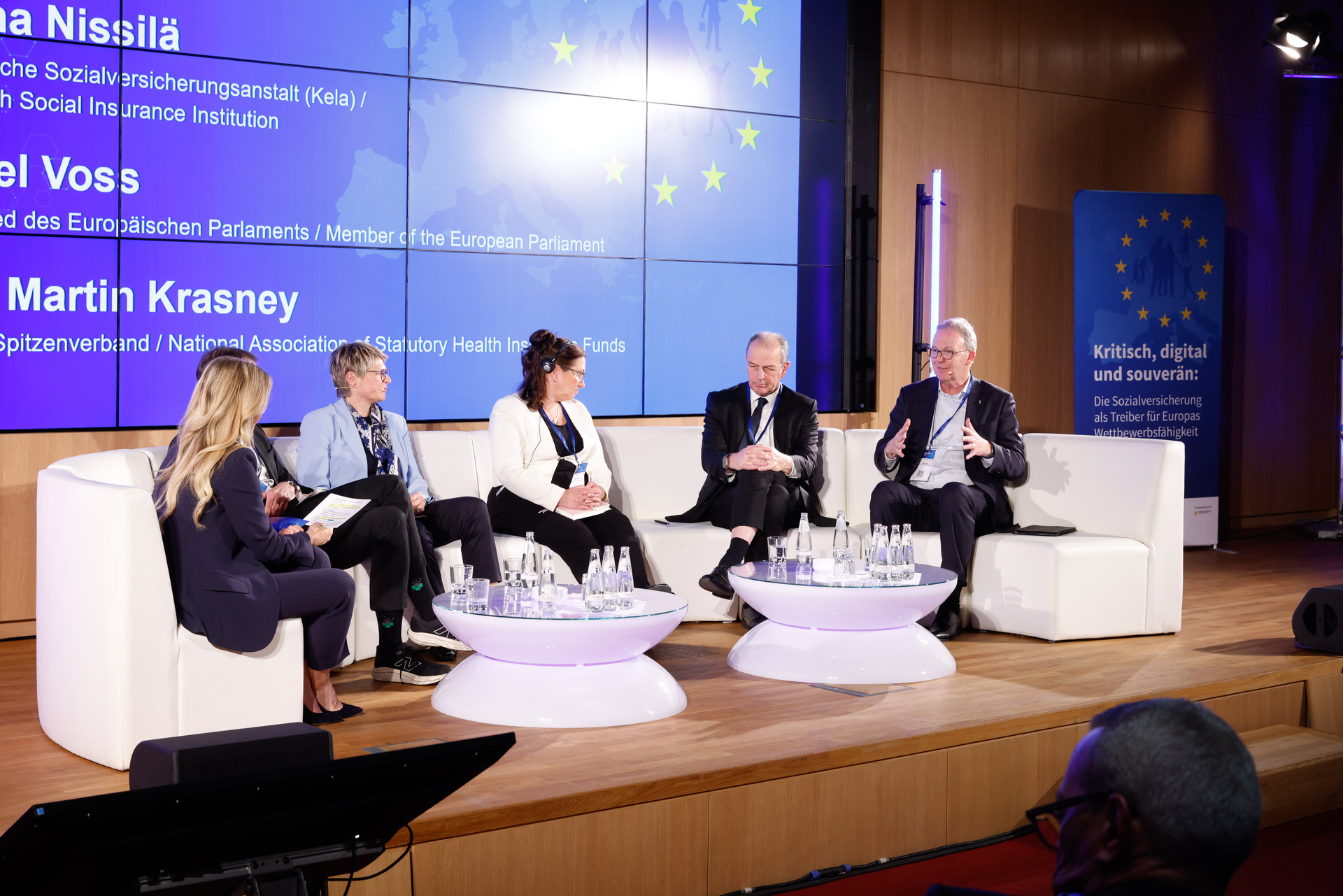
In the subsequent second panel, Dr Martin Krasney (GKV-Spitzenverband), Nina Nissilä (Kela, Finland), Gundula Roßbach (DRV Bund), Axel Voss (European Parliament) and State Secretary Dr Michael Schäfer (Federal Ministry of Labour and Social Affairs) discussed the use of AI in social security. They highlighted the considerable potential for more efficient administration and improved medical care, while also addressing the requirements for transparency, governance and cybersecurity.
Dr Martin Krasney underlined the considerable potential of AI in public administration and medical care through chatbots, client analytics and intelligent practice software. To realise this, social insurance institutions must be able to use their data meaningfully and lawfully. Nina Nissilä illustrated how far AI is already delivering practical benefits at Kela, where it identifies overpayments, misuse and internal errors. Transparency, clear governance and a public AI register are, she stressed, essential for maintaining public trust.
Gundula Roßbach placed the focus on staff, who can be supported but not replaced by AI. The German Federal Pension Insurance, for instance, uses AI in employer audits to reduce staff workload. What matters most, she noted, is equipping employees with the right skills. Many have never been trained to work with data-driven systems or to take AI-supported decisions, and they need confidence in handling these new tools. State Secretary Dr Michael Schäfer also pointed to a BMAS training curriculum designed to systematically familiarise employees with digital applications and to modernise large public authorities step by step.
Axel Voss brought in a distinctly European perspective. He criticised national solo efforts for hindering interoperability and causing the EU to lose momentum in deploying new technologies. Digitalisation, he argued, is no longer a national task but a shared European challenge for the future.
Europe on the move – Digital cooperation across borders
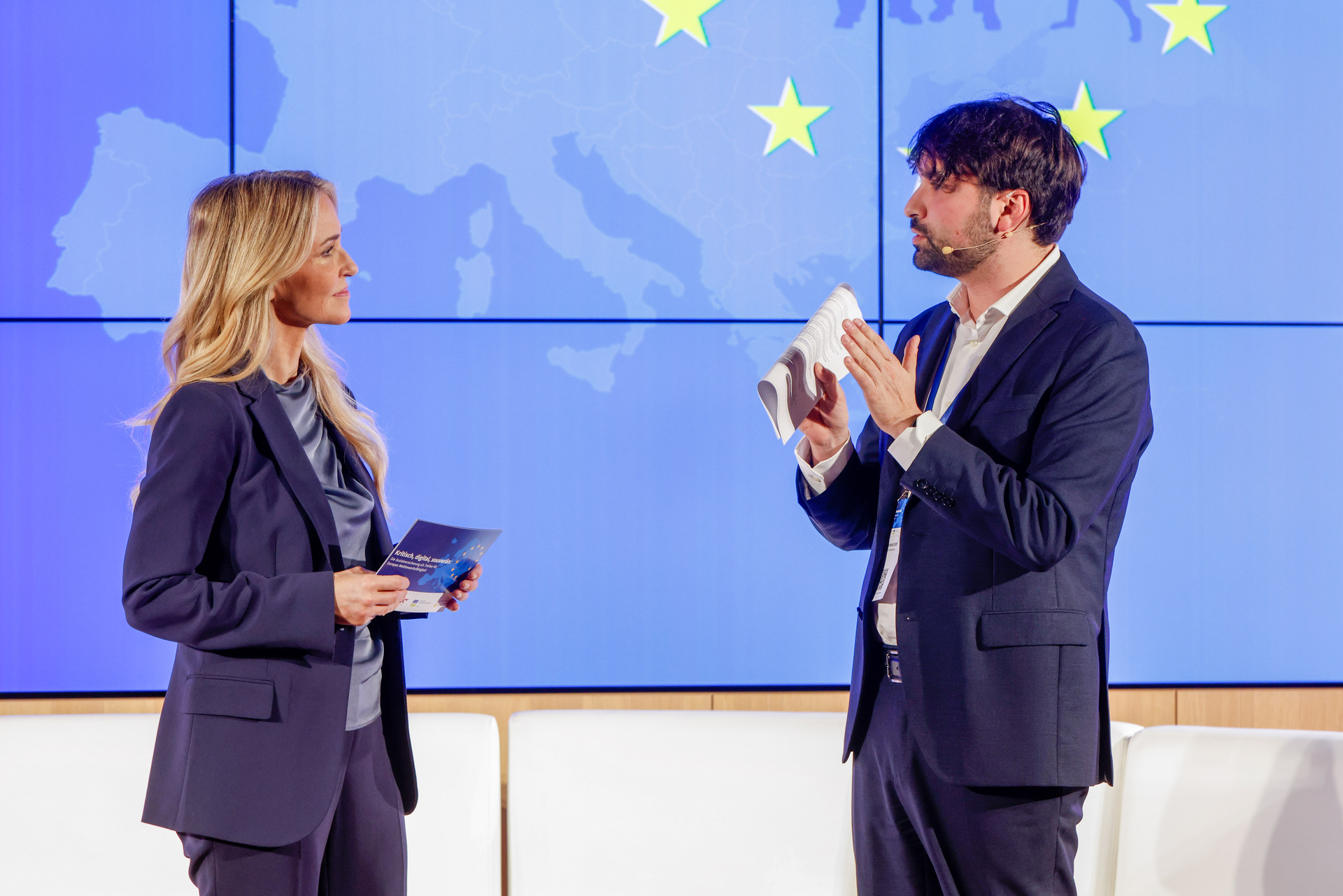
The third panel demonstrated how crucial digital cooperation is for cross-border mobility and social security in Europe. In his keynote, Dr Francesco Corti, Cabinet Member to Executive Vice-President Mînzatu (European Commission), stressed that the free movement of workers makes the Single Market possible – and that such mobility is inconceivable without a well-functioning system of social security. The European Commission therefore plans to launch the Fair Mobility Package. By means of digitalisation – supported also by AI – the aim is to facilitate labour mobility, strengthen social protection and curb fraud.
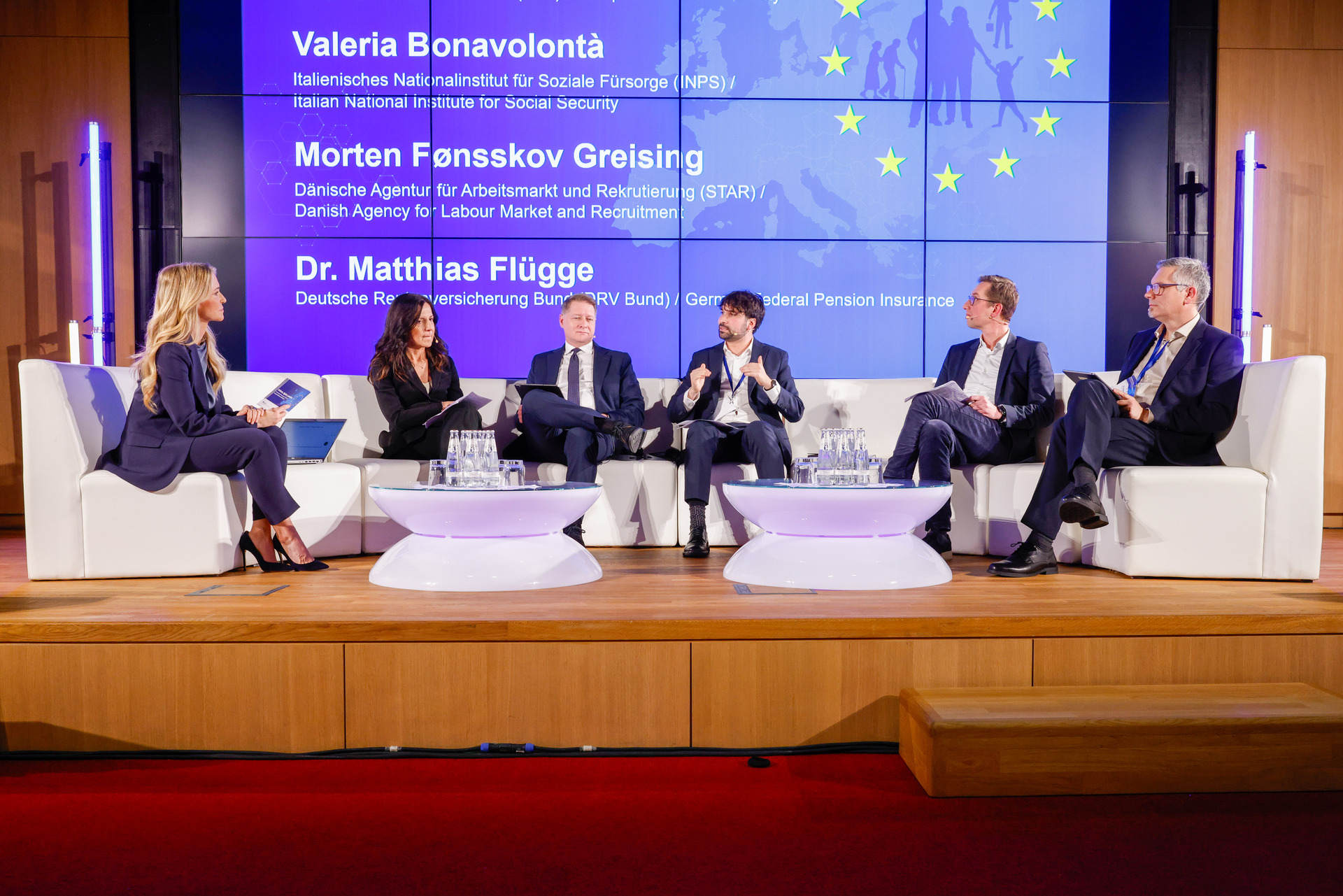
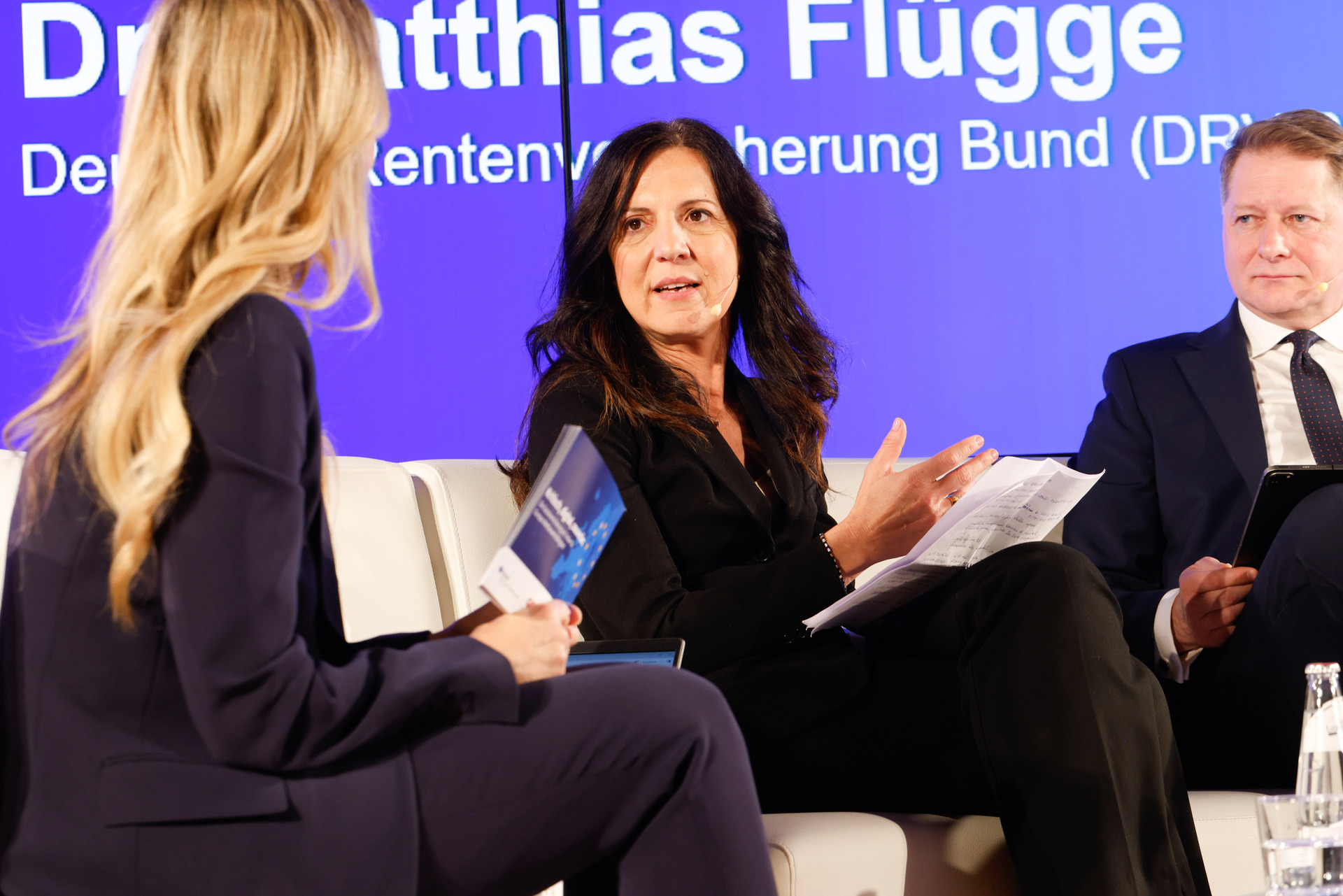
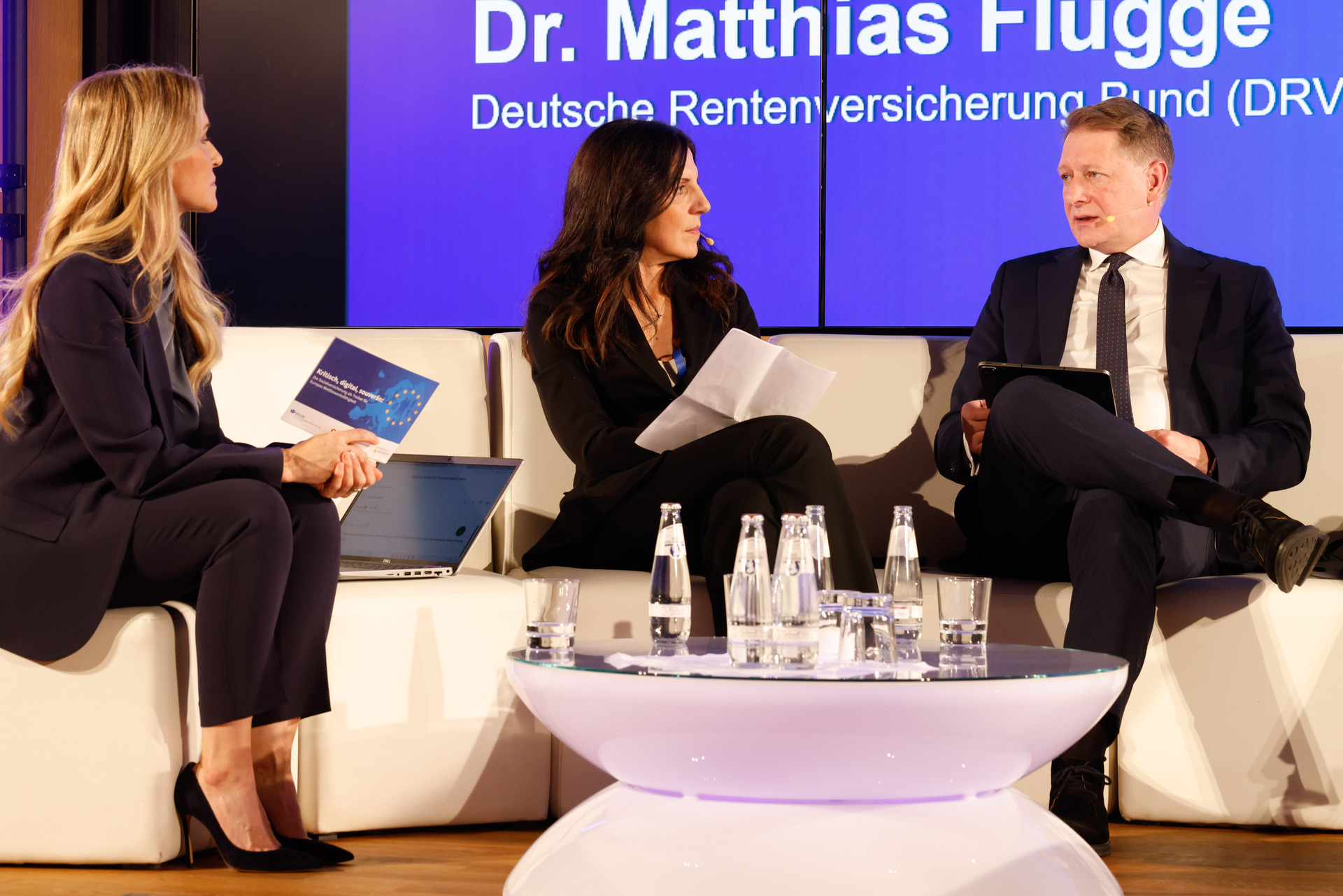
Dr Francesco Corti (European Commission), Cosmin Boiangiu (European Labour Authority), Valeria Bonavolontà (INPS, Italy), Morten Fønsskov Greising (STAR, Denmark) and Dr Matthias Flügge (DRV Bund) then discussed digitalisation in the context of cross-border employment. The debate focused both on the progress already achieved and on the next essential steps in shared data exchange, tackling irregularities and improving administrative processes.
Dr Matthias Flügge highlighted the success of EESSI, noting that the system has simplified and accelerated data exchange between 3,400 social security institutions in 32 countries without any loss of quality – a key factor in maintaining insured persons’ trust. Dr Francesco Corti announced that the European Commission intends to present a proposal in June 2026 to integrate the digital proof of the PD A1 into the ESSPASS. Morten Fønsskov Greising argued for incorporating additional proofs in future, such as a new European labour card.
Valeria Bonavolontà stressed that the wide-ranging opportunities offered by digitalisation can only be realised if cross-border data exchange is significantly improved. In this regard, she referred to the cooperation agreement concluded this year between Italy and France to combat fraud. Together with Cosmin Boiangiu, she called for a pan-European approach as the next step.
In closing, Dr Francesco Corti urged social security institutions to contribute their expertise even more actively at European level in order to make their voices heard. It is important for the European Commission, he emphasised, to understand how European initiatives affect social security institutions in practice and where positive adjustments may be needed to ensure implementations that are workable on the ground.
A shared responsibility for the future
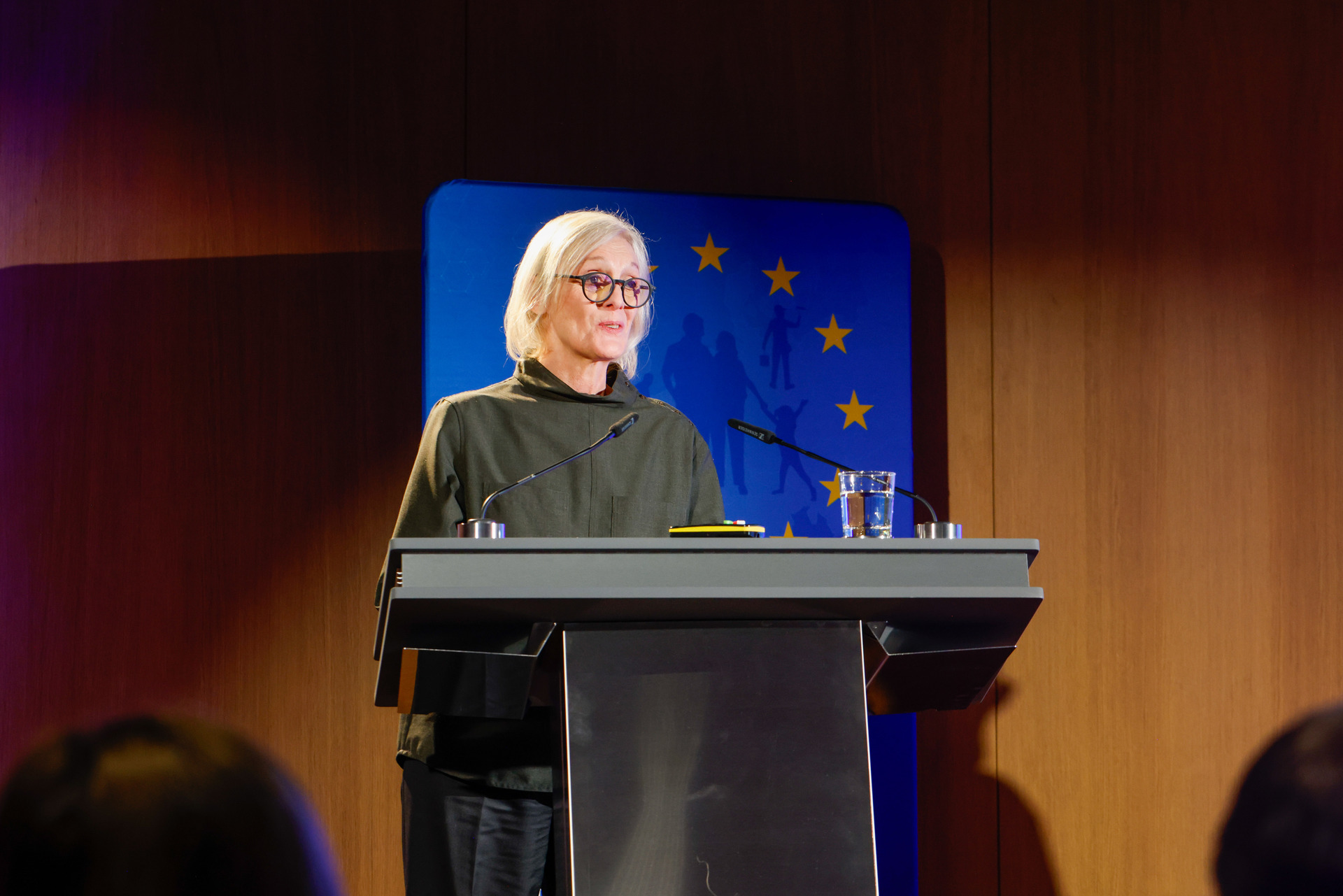
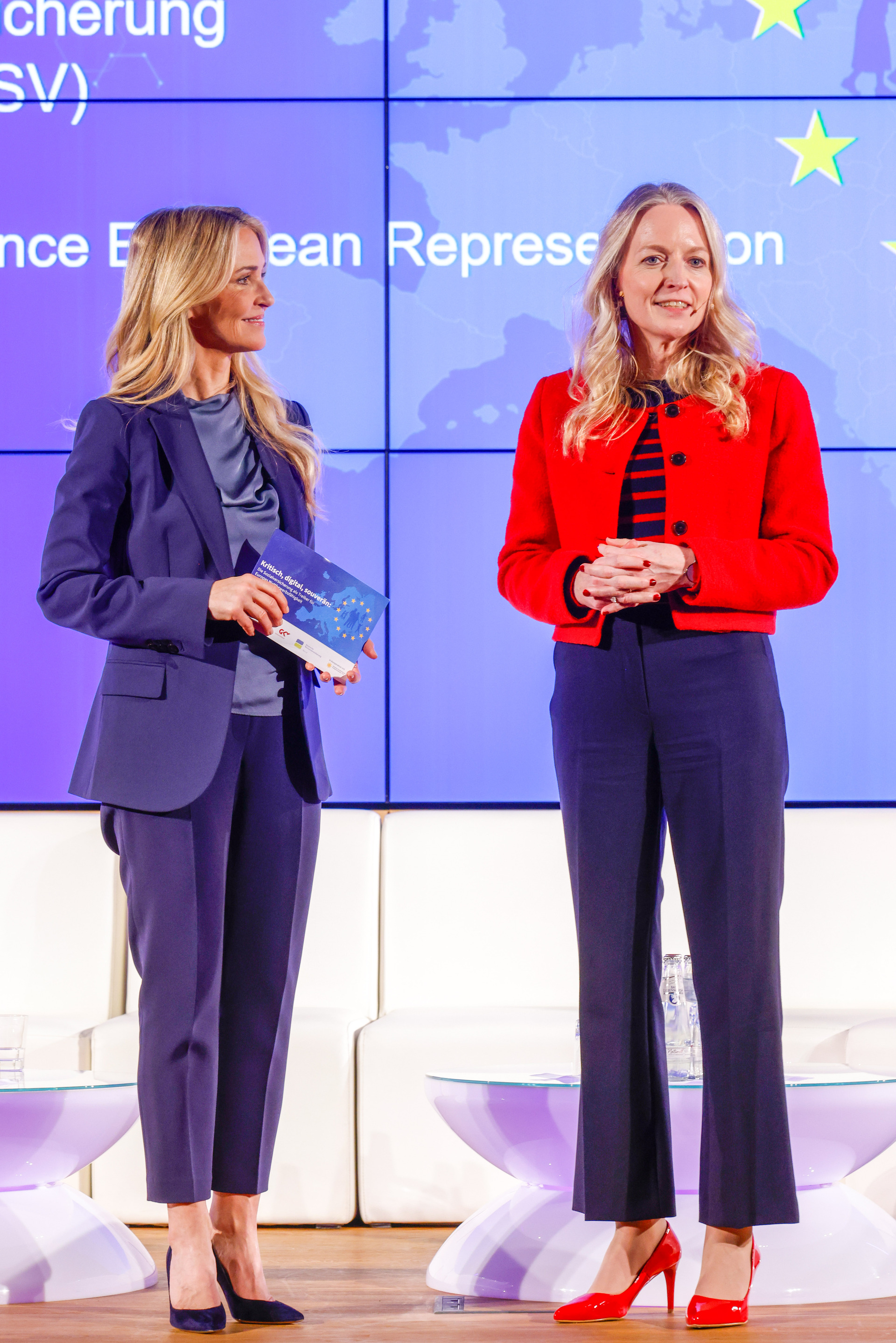
In her closing remarks, Ilka Wölfle (DSV) underlined that the discussions had shown not only that the social security system is an active driver of Europe’s competitiveness, but also that Europe itself is a driving force behind digitalisation within social security. The event made clear how much potential lies within the social security institutions – in their expertise, their capacity for innovation and their willingness to take responsibility for the digital transformation. The task now, she stressed, is to harness this potential, to move forward with determination and to bring European initiatives to life in a consistent and meaningful way.
Ilka Wölfle also stressed how important it is not only to discuss these European developments in Brussels, but to actively bring them into political discussions at national level. She encouraged all stakeholders to regularly highlight European issues in their exchanges with policymakers – particularly because many of these initiatives will need to be implemented directly by the social security institutions within just a few years. Europe, she emphasised, does not begin in Brussels, but wherever national actors engage early and take responsibility.